Introduction
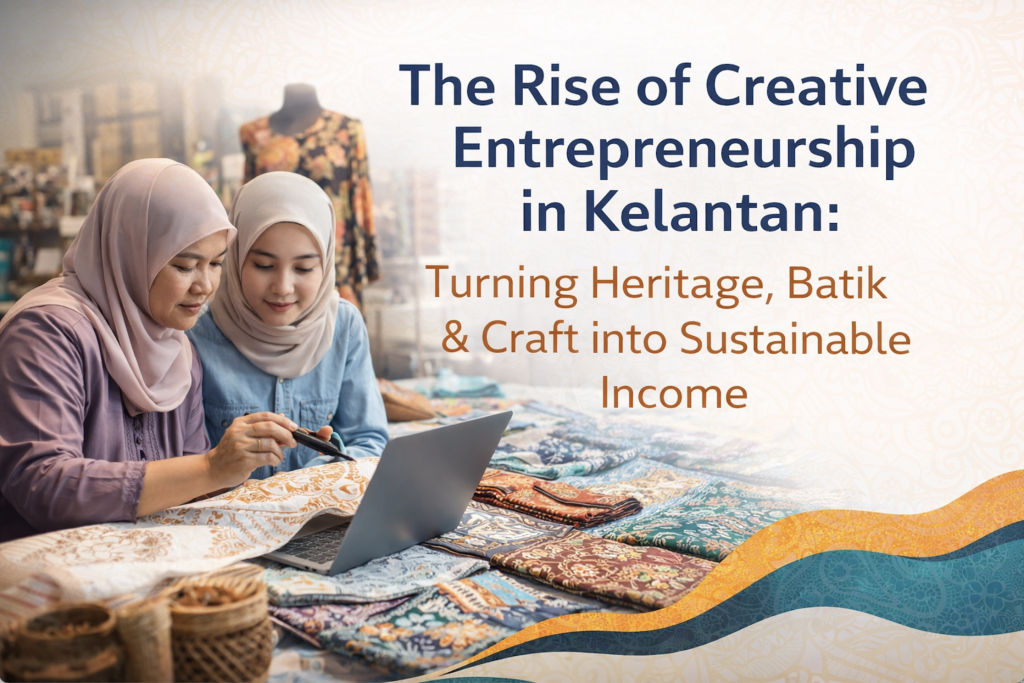
Creative entrepreneurship is rapidly becoming one of Kelantan’s most vibrant economic avenues, driven by a blend of cultural heritage, youthful innovation, and increasing digital adoption. In recent years, a new wave of artisans, designers, and home-based creators have transformed traditional crafts, especially batik, textile art, and handmade products into modern, marketable items with strong commercial appeal. This shift reflects more than just economic activity as it shows how culture, identity, and creativity can be reimagined to empower communities. As young entrepreneurs leverage social media, e-commerce, and storytelling, Kelantan’s creative landscape is evolving into a sustainable ecosystem that honors tradition while embracing modern business potential.
Cultural Heritage as a Modern Economic Asset
Kelantan is known for its rich cultural heritage, particularly its batik craftsmanship, traditional weaving, and artisanal products. These elements of heritage offer a unique competitive advantage in a world that increasingly values authenticity and handcrafted items. Creative entrepreneurs today are taking what was once considered a traditional skill and redesigning it for contemporary markets, producing batik streetwear, artisanal home décor, accessories, and personalised craft goods that appeal to younger audiences. By merging traditional motifs with modern aesthetics, Kelantanese artisans are proving that heritage is not something to be preserved solely in museums, but something that can be lived, worn, and commercialised sustainably.
The Role of Gen Z in Shaping Creative Industries
Gen Z entrepreneurs are at the forefront of Kelantan’s creative revolution. Tech-savvy, experimental, and highly expressive, this generation uses digital platforms to tell compelling stories about their products and craft-making processes. They often document behind-the-scenes production, show the labour and love involved in crafting batik, and build personal brands that feel authentic and relatable. Through TikTok, Instagram Reels, and live commerce, many young Kelantanese artisans have successfully reached nationwide and even international audiences. Their creativity extends beyond product design as they innovate through marketing, collaborations, packaging, and community-building, which strengthens the overall ecosystem of creative entrepreneurship in Kelantan.
Challenges Faced by Creative Entrepreneurs
Despite the growing potential, creative entrepreneurs in Kelantan face several challenges that require attention for long-term sustainability. Many artisans struggle with capital constraints, limiting their ability to scale production or invest in advanced tools. On the other hand, others face competition from cheap, mass-produced imports that dilute the market for genuine handmade products. In addition, not all entrepreneurs have strong digital marketing skills, making it difficult for them to compete in a marketplace driven by visuals and online engagement. Consistency in branding, storytelling, and business planning also remains a challenge, especially among microentrepreneurs operating without formal training. These hurdles highlight the need for ongoing support, structured training, and community-based initiatives.
BATIK-YOUTH as a Transformational Platform
Initiatives like the BATIK-YOUTH program play a meaningful role in nurturing and elevating Kelantan’s young craft entrepreneurs. By combining artisanal skill development with entrepreneurship training, digital marketing coaching, and mentorship from industry leaders, BATIK-YOUTH empower participants with both creative and business acumen. The program supports young women in particular, helping them turn creative passion into sustainable income streams. Participants learn essential skills such as product photography, storytelling, business planning, customer engagement, and brand identity building. Through this initiative, many artisans gain the confidence to commercialise their work, expand their market reach, and position themselves competitively in Malaysia’s creative economy.
Digital Platforms Expanding Market Reach
Social media platforms and e-commerce marketplaces have become vital tools for transforming local craft into national and global commodities. Digital platforms provide artisans with direct access to customers without needing physical stores or large investments. Entrepreneurs can now participate in TikTok Shop live sessions, sell through Shopee, and promote their stories on Instagram to showcase the uniqueness of their craft. The use of digital storytelling not only boosts sales but also creates emotional value around handmade items, allowing artisans to price their work more sustainably. This digital shift has significantly widened market opportunities for Kelantanese craft entrepreneurs, enabling them to thrive beyond their local communities.
Sustainable Impact on Community and Identity
Creative entrepreneurship goes beyond economic gain. It contributes to community empowerment, cultural preservation, and identity building. When young artisans practise and modernise traditional crafts, they help ensure that these skills are passed on and not forgotten. Families gain additional income, communities strengthen their economic resilience, and local heritage becomes a source of pride. As creative industries expand, they can stimulate tourism, encourage collaboration between artisans, and attract new forms of cultural investment into Kelantan. The long-term impact is a community that celebrates its roots while moving confidently toward modern entrepreneurship.
Conclusion
The rise of creative entrepreneurship in Kelantan reflects a powerful intersection of heritage, innovation, and youthful ambition. By turning batik, craft, and cultural artistry into sustainable sources of income, local entrepreneurs are proving that tradition can thrive in a digital era. With continued support through training programs, digital empowerment initiatives, and community partnerships, Kelantan has the potential to become a national hub for creative enterprise. As this momentum grows, creative entrepreneurship will not only uplift individual artisans but also strengthen the cultural and economic fabric of Kelantan as a whole.